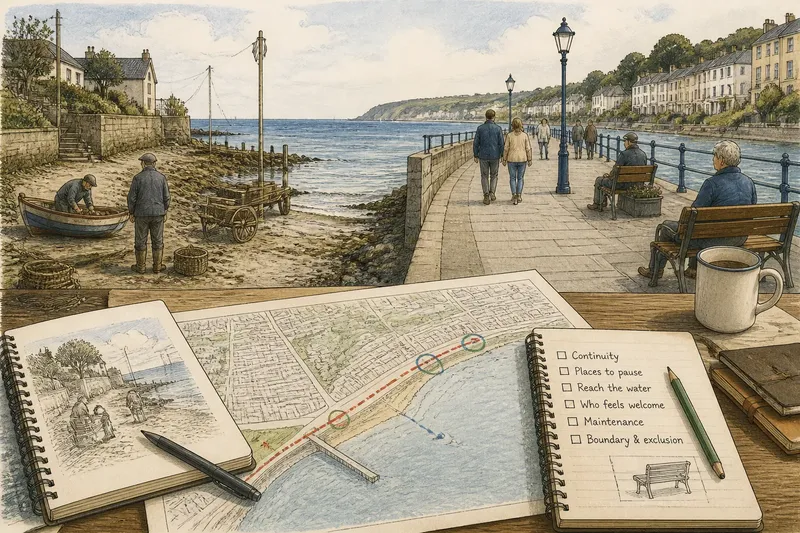
Why a Harbour Has More Than One Public Purpose
Why a harbour has more than one public purpose: see how work, access, and civic life overlap, and how naming each use clarifies policy choices.
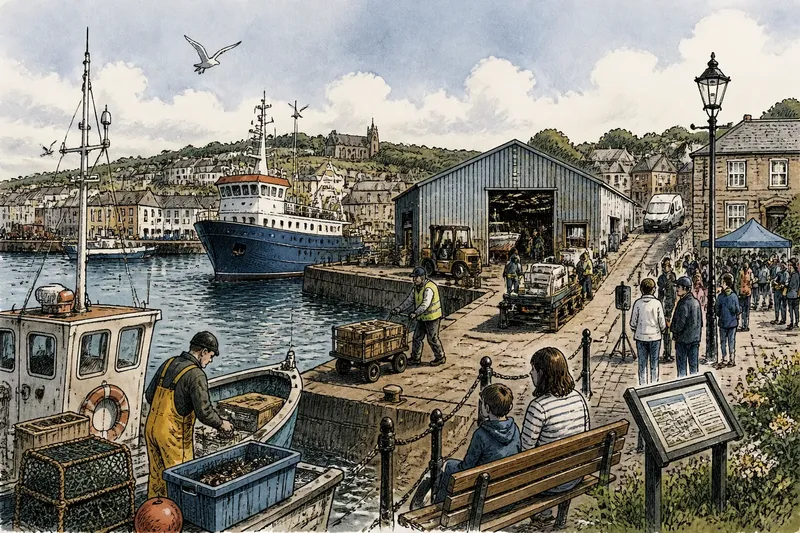
The common mistake in a harbour debate is to treat the place as if it had one obvious job. That can make a proposal sound like a simple contest between boats and visitors, while the real costs fall on people whose needs were never named. Understanding why a harbour has more than one public purpose starts with seeing its uses as overlapping claims on the same working shoreline.
A harbour may be a route for commercial vessels, a base for fishing or repair, a point of access to the water, and a setting for public gatherings. Those functions can share space, but they do not always share the same hours, facilities, or tolerance for disruption. Naming them clearly is the first step toward understanding what a policy choice would change.
1. What counts as a harbour’s working purpose?
“Working harbour” is not a synonym for a place used only by large ships. The term can include a small fishing fleet, a ferry landing, a boatyard, fuel delivery, marine maintenance, or the movement of supplies to waterfront businesses. Each activity depends on particular conditions, such as a usable approach channel, secure mooring, vehicle access, or room to handle equipment.
That specificity matters in public discussion. A proposal to add a waterfront seating area may sound compatible with “harbour activity” until its location blocks a repair yard’s access or narrows a route used to move gear. Naming the actual operation makes it possible to ask which part of the proposal creates the conflict, rather than treating work as an abstract objection.
It also reveals dependencies that are easy to overlook. A pier used by one operator may support several smaller services, while a modest service road may be essential to work that happens at the water’s edge. Policy documents are more useful when they identify these connections instead of relying on broad labels such as “commercial use.”
2. How does public access differ from public ownership?
People often use “public harbour” to mean that everyone can reach the water. In practice, ownership, legal access, and comfortable use are different questions. A publicly owned dock might be reserved for certain operations, while a privately managed waterfront might include an easement or public walkway subject to stated conditions.
Access also has several forms. Someone may be able to stand near the water but not launch a small boat, reach a fishing spot, board a ferry, or move through the area with a stroller or mobility aid. A policy discussion should specify which activity it means by access and where that access begins and ends.
Consider an invented situation: a town proposes a viewing platform beside a working landing. The platform could bring more people to the shoreline, but the landing’s operators need to move carts through the same corridor. If the town identifies both public viewing and working passage as intended uses, it can assess the layout against those needs instead of calling either side an obstacle.
3. Why does civic use belong in the discussion?
A harbour can serve as a place where a community gathers, marks local traditions, learns about maritime work, or simply meets the water. These civic uses may not require a dedicated building. A broad quay, a public notice board, a sheltered spot to watch arrivals, or room for a small event can make the shoreline part of ordinary public life.
Yet civic use is not automatically compatible with every operation. A large gathering may complicate access for a ferry or emergency response; a quiet seating area may conflict with noise from repair work. The useful question is not whether the harbour should be “open” or “working,” but which activities belong there at particular places and times.
That framing can make public meetings more precise. Instead of asking residents to choose between development and preservation, officials can ask what kind of gathering space is needed, who relies on it, and what operating conditions must remain possible. The answers may point to shared space, separate zones, or scheduled use, depending on the site.
4. How can people compare competing harbour uses?
A sound comparison begins by naming what each use needs and what it may impose on others. The same strip of waterfront can be valuable for several reasons, but those reasons are not interchangeable: a vessel needs safe movement, a visitor may need a clear route, and a community event may need room to assemble.
- Identify the activity: Describe the actual task or experience, not just a label such as “industry” or “recreation.”
- Locate the dependency: Note the pier, access lane, mooring area, launch point, or public route the use relies on.
- Describe the timing: Establish whether the use is continuous, seasonal, tied to tides, or concentrated around arrivals and departures.
- Trace the effect on others: Ask whether another activity loses access, becomes less safe, or is pushed into a less usable area.
- State the public purpose: Explain who benefits and what community need the activity serves.
- Separate manageable friction from displacement: A temporary inconvenience is different from losing the only workable route or facility.
These questions do not produce an automatic ranking. They help decision-makers distinguish a real incompatibility from a conflict that might be addressed through placement, operating hours, or clearer rules. Where the choice remains difficult, the public can see which purposes are being favored and why.
5. What should a harbour policy explain?
A policy is easier to evaluate when it connects a rule to a purpose. If a dock is reserved for loading, the public should be able to understand what activity requires that reservation. If a route is designated for public passage, the policy should make clear where it runs and how it relates to working areas.
Useful documents also distinguish present conditions from intended changes. A map may show a public walkway, but a written policy can explain whether it is meant for through travel, waterfront access, or occasional events. That distinction helps residents comment on the actual proposal rather than on an imagined version of it.
For rules that depend on an ownership instrument, permit, manufacturer’s instructions, or local regulation, consult the controlling document or the relevant qualified professional; the general labels alone may not settle what is allowed.
Which harbour questions help clarify the choices?
Can a working harbour also be a public place?
Yes, where access and operations can coexist under clear conditions. The practical question is what people may do, where they may do it, and how working access remains usable.
Does public access mean every waterfront area must be open?
No. A public purpose can include designated routes or spaces while leaving operational areas restricted. Explaining the boundary and the reason for it is more informative than using “public” as a blanket description.
Who decides which harbour use takes priority?
The answer depends on the place’s governance, ownership, permits, and applicable local rules. Public decision-making is clearer when the responsible body identifies those authorities and explains how affected users can comment.
What if two uses cannot share the same space?
Decision-makers can compare alternatives such as a different location, a change in timing, or a defined separation between uses. If none resolves the conflict, they should state which purpose takes precedence and what consequence follows for the other users.
Why does naming purpose matter?
Harbour policy often begins with a boundary, a proposed facility, or a request for access. But the underlying decision is about which activities the place must support and what changes are acceptable. Naming the working, access, and civic purposes makes those choices visible before a rule or design hardens into a default.
When you read a harbour proposal, look for the verbs: loading, launching, repairing, crossing, gathering, watching. They reveal more than a broad promise to “improve” the waterfront. A useful account of why a harbour has more than one public purpose makes room for those distinct actions, then explains how the decision treats each one.